Every time I turn on the TV at the moment I hear fighting about how best to get the US economy back on track. Needless to say, I do not have the answer to that problem. But what I’ve noticed more and more is how steadfast people are in their refusal to ask more questions. Rather that acknowledging how much we don’t know about the best road to economic recovery, people insist that “My way is THE way” and that if you don’t buy into it, you’re an idiot. Something about that approach not only rubs me up the wrong way, but just comes across as incredibly foolish, arrogant and destructive. [...]
In December 1903 a New York Times editorial questioned the intelligence of the Wright Brothers who were trying to invent a machine, heavier than air, that would fly. “It simply defies the laws of physics,” they wrote. One week later, at Kitty Hawk, the Wright Brothers took their famous flight.
If you study history, you will find that all stories of great success are also stories of great triumph over adversity. But often we overlook the setbacks and only see the end success. We think the person got lucky: “He/she must have been at the right place at the right time.” Or maybe they were just really smart. Or talented. Or well connected. But that’s all bunk. While it may have been a little bit of each, what ultimately led to their success was their refusal to allow their setbacks and failures to define them.
If you think you dare not, you don’t!
If you like to win, but think you can’t,
It’s almost a cinch you won’t.
Life’s battles don’t always go,
To the stronger and faster man,
But sooner or later the man who wins,
Is the man who thinks he can.
Einstein did not speak until he was four and did not read until he was seven, causing his teachers and parents to think he was mentally handicapped, slow and anti-social. Eventually, he was expelled from school and was refused admittance to the Zurich Polytechnic School. You could say he had a slower start than many of his childhood peers. But I’m sure you’d agree that he eventually caught up pretty well. Today the name Albert Einstein is synonymous with genius.
As a young cartoonist, Walt Disney faced countless rejections from newspaper editors. He “lacked natural talent” they said. One day a minister from a local church took pity on the young cartoonist and hired him to do some cartoons in a small mouse infested shed behind the church. After seeing a small mouse, he became inspired to draw it. And so Mickey Mouse was born.
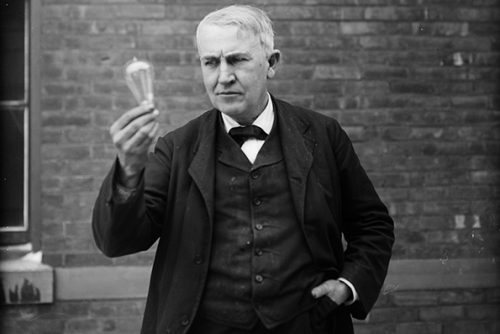
One day a partially deaf four year old kid came home with a note in his pocket from his teacher, “Your Tommy is too stupid to learn. [...]
As I woke this morning the first thought that drifted into my head was that today is my brother Peter’s birthday. And then it hit me that it was a year ago today that I last spoke to him. Pete was in a psychiatric hospital. On his 31st birthday. In Sydney. I must have tried about five times to get through to his ward. I am so glad I persisted. It was the last time I ever spoke to him.
Next month will be a year since Peter took his life after a long a tortuous struggle with schizophrenia. And despite the fact that I’ve had nearly a year to get my head around the fact that my brother is no longer in this world, some days it still hits me like a Mac truck that Pete is dead. That I will never see him again and that he will never get to grow old. Like I intend to. And while there are days when I can talk about my loss and the lessons I’ve learned, there are other days, and moments, when I find myself drowing in my tears and wondering how life could have been so cruel to him.
As I wrote about soon after his funeral last year, en route back to the States from Australia, death can be incredibly confronting to the mind and wrenching to the heart. I guess you could say I’m lucky that I’ve never had to really get my head around death until my forties. I guess that is ‘luck’. But I’m not sure it matters what age you are, loss is loss and losing someone you love, whether suddenly and unexpectedly or after a long protracted illness, is still brutal.
Years ago at a coaching conference a very wise man called Julio Ollalo said that it is through sadness that we come to know what matters most to us. I was struck by that thought then as I am now. That it is through loss, and through the tears that it gives birth to, that we connect to the very core of what we hold most sacred in life. Peter’s death certainly did that. It connected me to the gift of family, to the beauty of community, and to the bonds of love that tie both together. Never in my life had I felt the presence of love so profoundly or intensely as I did the day that I buried my brother Peter with my dear mum and dad, two other brothers and three sisters, and friends who had travelled from near and far to give witness to our love for Peter on that April day.
I do not know what saddens you. Nor what losses have wreaked havoc with your heart. But I do know this. The only way out of sorrow is right through the raw heart of it. And that when you emerge from the other side you have a choice about whether to dive into the sacredness of life more deeply, or to barricade yourself away from it. The reality is that the only way to experience the greatest joy that life holds in store for us is to allow ourselves to be vulnerable to the deep sense of sadness and sorrow that comes from losing that which we hold dear.
You’ve heard the saying that life is what happens when you are making other plans. It sure is. And so we are all inevitably left with is how we will choose to respond to all that life unfolds before us - the great opportunities along with the setbacks and sorrows. Some choose anger. Some choose blame. Some choose bitterness and some choose despair. Today I choose to sit in the questions, to take time to reflect on the deeper lessons hidden in my adversity, and to hold on to faith that profound goodness can come even from the saddest and most tragic of circumstances.
I hope you will choose that to.
Happy Birthday Pete.
Two weeks ago I said yes to a morning at trapeze school. Naively as it turned out. It was absolutely terrifying! But I jumped anyway. Five times in all. And while I wouldn’t race back to do it again, I’m glad I did it. Because hanging upside down 23 feet above the net (though if felt like 1,000 feet!), I knew I was well and truly alive. To me that is what life is ultimately all about – being willing to step (in this case jump) outside our comfort, push the envelope of possibility and live in such a way that we know we are “well and truly alive”.
Many people I meet don’t feel “well and truly alive” in at least one area of their life. We human beings are really much more ‘human becomings’ than anything else… always in the process of becoming all that we really want to be – whether in our relationships, our career or business, to stay fit and eat well, to gain mastery of a skill, or to be as productive, generous or influential as we would like.
Earlier this week I asked my Facebook Courage Community what they believed is the #1 factor holding people back in work, love or life. Most replies reflected what we generally know to be true, but are often loathe to admit: that the biggest obstacle to our success and happiness is ourselves. And while it may present in different ways – laziness, procrastination, cynicism, arrogance, recklessness, apathy, despair – at its core is the primal emotion of fear. Fear of failure or looking foolish; fear of rejection and disapproval; fear of not measuring up, of being inadequate, alone or unloved.
While our fears can serve a positive role, they can also trap us in jobs, relationships, habits, and lives of quiet desperation that leave us thirsty for purpose, hungry for depth and disconnected from the unique potential that lies within us. A billion dollar industry of anti-anxiety and anti-depressant drugs speaks for itself. Indeed, countless people live their entire lives trapped in false beliefs, shrouded under a cloud of fear so pervasive that they are not even aware they are trapped… in their own life. Fear has become the new normal.
As someone who is intimately acquainted with the life-sucking force that fear can wield, I am convinced that [...]
Last week I spoke to a group of people struggling to find work and stay optimistic in the face of ongoing job disappointments. When I came home that evening, I turned on the TV to watch Maria Shriver sharing her struggle with uncertainty about what lies ahead once she is no longer California’s First Lady. On the weekend I met a high school senior anxious about which college he’d get into next year and a woman uncertain about whether she would ever have children. Then yesterday I was speaking to a friend about the uncertainty she faces heading back into the work force after years at home raising children. It seems that people everywhere, across all socio-demographic groups, are struggling with uncertainty.
There’s no doubt about it, uncertainty can be uncomfortable. We enjoy the stability that comes from having continuity between our past and future, a future that is familiar, stable, controllable and predictable. We like to feel that we are masters of our own ship, in control of our fate, and so it’s entirely natural to find ourselves feeling a little out of sorts when our future becomes an unknown quantity.
Whether it’s change we are choosing, or change thrust upon us, when the ground beneath our feet starts to shift, we can’t help but feel a bit shaky. What lies ahead? How will it affect my life and family? What adjustments will I need to make? What if I can’t make them? What if I don’t want to make them?! What if… what if… what if…?
Times are tough and many people are struggling to stay optimistic given the state of the economy, the insecurity of their jobs (if they have one), the size of their mortgage and the strain that puts on relationships at home. Maybe you are one of them or maybe you know someone else who is having it tough.
But just because we can find lots of reasons for feeling down and becoming a bona fide pessimist doesn’t mean that we should. The fact is, optimism creates opportunity and pessimism kills it. Expecting good things to happen will lead to taking actions that produce positive results. Expecting only more bad stuff to come your way will keep you from doing the very things that might have minimized or avoided just that!
The word “optimism” actually derives from the Latin word “optima,” meaning the best outcome or belief in the greatest good. As I said during my recent interview on the TODAY SHOW, while some people are naturally more optimistic than others, ultimately we all get to wake up every day and choose whether we are going to be a glass half-full, or a glass half-empty person.
Visit msnbc.com for breaking news, world news, and news about the economy
Below are 7 strategies for filling up your cup of optimism. My challenge to you is to try at least one of these and notice the difference it makes to your outlook and your life.
1. SET YOUR INTENTION
Before you step out of bed (and if you forget, before you leave your home) take one minute to set your intention for the day by coming up with one word that resonates with you about the attitude or spirit you want to bring to the day. Being intentional acts like a compass and helps you better focus your time and energy. For instance, if you’ve been looking for work but have found yourself stuck in a rut and procrastinating, you might choose to be proactive and set yourself a goal of making at least 5 calls/emails today to follow up on job leads and opportunities. The intention you choose will vary according to the challenges you are facing.
QUESTION: What is your intention for the rest of today? To be more assertive, organized, focused, tenacious, self-reliant, resourceful, determined, persistent or patient?
2. PERFORM AN ACT OF COURAGE
Often the very thing we need to improve our circumstances requires courage. That is, closing the gap between where you are now and where you would like to be in life will require stepping outside your comfort zone and doing something that scares you in some way. It could be picking up the phone to invite someone to dinner, attending an exercise class or having a conversation with your boss about an issue that’s been upsetting you. There is no better way to build self-confidence than doing something that stretches you as it teaches you that you are capable of more than you thought you were.
QUESTION: What would you do today if you had no fear of failing or looking foolish? [...]
You’d have to be living in a cave the last month not to be aware of the growing environmental disaster caused by an explosion on a BP oil rig in the Gulf of Mexico. Having a long-held fondness for the company that gave me my first “real job” as a Graduate Trainee in their Australian head office, I couldn’t help but feel some level of sympathy for my old colleagues who still work for BP. Having your company dragged through the mud in the media, even if it is for good reason, is not an enjoyable experience.
It’s been many years since I playfully fought my then-boyfriend (now husband), who worked for Mobil Oil, about which gas station we should fill up in (me claiming BP’s were far more attractive, him convinced that Mobil’s were better quality underneath the glam). It has also been many years since BP transformed those initials from British Petroleum into Beyond Petroleum… ah the irony.
Of course none of us are yet certain about the exact chain of events that culminated in the explosion in the Gulf of Mexico last month. What I am fairly certain of is that there was an absence of effective leadership, communication and accountability. I also think there are valuable lessons we can all take from this situation and apply in our own workplaces and relationships.
We humans share an instinctive desire for self-preservation and an innate aversion to situations that might be emotionally uncomfortable. In an organizational setting this can drive employees to “play safe” and avoid crucial conversations about [...]
Forgive me if this post is a little raw. Life has been raw for me these last couple weeks.
My youngest brother Peter died just over two weeks ago and I’ve been living life at its rawest ever since.
Pete, who was 31, suffered from schizophrenia for the last ten years. All mental illnesses cause enormous suffering for those who have them and incredible heartache and angst for those who love them. Peter, number 6 of the 7 kids in my family, was very loved by our family and we all did the very best we could, each in our own way, to help him. Over the last decade, as Pete returned to hospital again and again, his dreams crashed to earth, his enjoyment of life disappeared and his hopes of ever living a fulfilling life gave way to severe paranoia, to ceaseless torment, to despair and, on Good Friday, to death.
As I type these words I am sitting on a plane high above the Pacific returning back to America from Australia where I’ve shed more tears with my family than I thought were possible. But in the midst of our sorrow, we have laughed at the fun times we shared with Peter — his boyish pranks, his humor, his brilliant athleticism and charm. We have been lifted up by the extraordinary outpouring of love from friends, family and community, near and far. We have savored the rich bonds of love that come to the fore during times of heartache. It has been a deeply moving, and extremely touching, two weeks.
There are currently more Americans who have been unemployed for more than 6 months than any other time in U.S. history (6.1 million according to the latest figures). And while we hear reports that things are looking up for job seekers, we also have leading economists predicting that the job market may not improve much until 2012.
For those who have find themselves out of work, staying positive and proactive in their job hunt can be a lot easier said than done. Rejection after rejection can take a toll on self-confidence, and with that, the motivation needed to keep trying to find work. But does being unemployed have to mean being miserable? Of course not.
Last week, I appeared on Let’s Talk Live here in D.C. to share some thoughts on how to stay positive when looking for work.
[HTML1]
If you’re out of work (or fear you may be soon), here are six strategies that will help you differentiate yourself from other job seekers, build your resume outside the workplace and land work despite the odds. [...]
The shootings at the military base in Fort Hood last week were tragic. There is no upside. Twelve good men and women now lie dead. Thirty others are still recovering from injuries. Countless more are still weighted down with incredible grief and shock and anger as they come to terms with the loss of those they loved and served their country with.
No doubt in the weeks ahead we will hear a lot about the possible motivations and warped thinking of Nidal Hassan, the man accused of murdering these people. This psychiatrist will find himself being psycho-analyzed again and again and again. And at the end of it all, we will still be left with more questions than answers. We will also be left wondering, is there anywhere that we can feel safe anymore? Who can we really trust? How could the warning signs from such an unstable person been missed?
I do not want to focus this newsletter on why Nidal Hassan did what he did. Nor on who he is. Nor on what systemic malfunction permitted him to be in the role he was. Lord knows the media are working overtime doing that. Rather I think it is of more value to you (and me) to explore how we, in the face of such an event which has triggered such intense horror and grief, can continue to move forward as wholehearted, trusting, compassionate and courageous people?
Sadness, horror, grief, anger, disillusionment – all of these are normal and healthy emotions which help us navigate our way through life and point us to what matters most to us. The well-being of those we love, our own safety and security and the importance of loyalty . . . to our friends, to our colleagues, to our country.
If we don’t own our emotions, they own us. Acknowledging our emotions is crucial if we are not to be consumed by them. Every emotion you feel is legitimate. It is also constructive. . . to a point. If your anger motivates you to address a perceived injustice then that is a good thing. If your fear motivates you to do get out of harm’s way then that is also a good thing. Likewise if your sadness helps you realize how much you care about something (or someone) then that is a good thing too. However there is an important difference between emotions that positively motivate us and those that control us. Sadly, all too often emotions like anger and fear take such a firm hold on our psyche that they cloud our thinking and drive us to to act in ways that sabotage our relationships, suck the joy out of our lives and create profound suffering.


Recent Comments